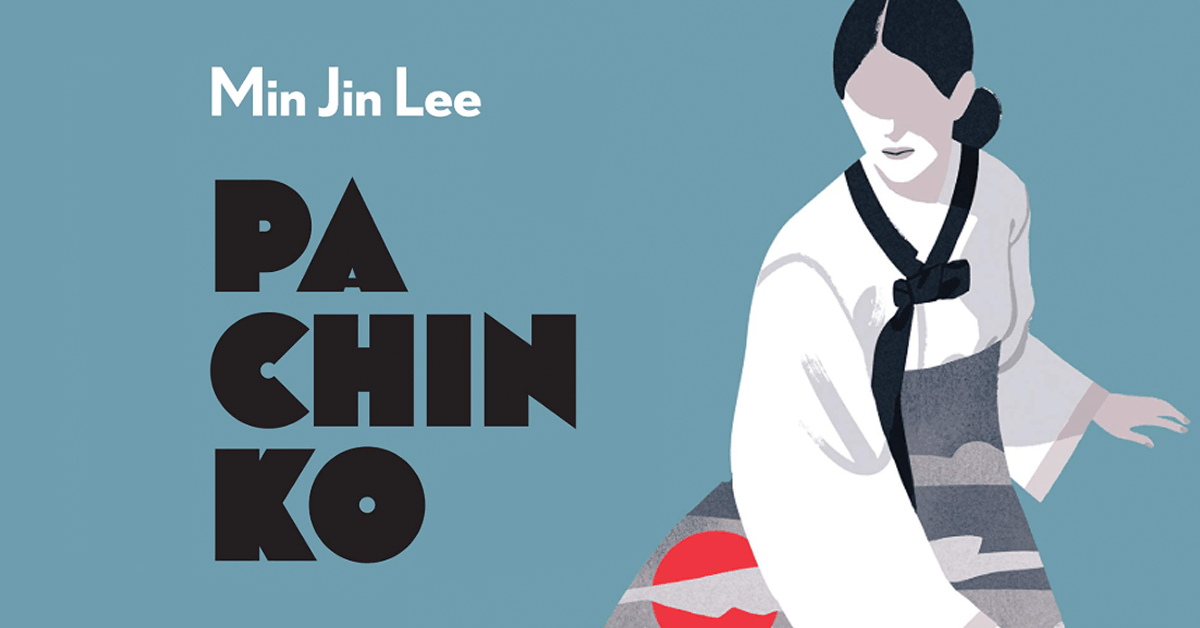
I just finished Pachinko and it quickly became one of my favorite books ever. It has been a while since a book has left me so hooked and invested in its characters.
Spanning from Korea under Japan’s annexation, through World War II and the Korean War into post-war Japan, the story moves naturally through moments of complex emotion and cultural commentary.
While the historical scope gave me a deeper understanding of those events from an educational point of view, it’s the human side that got me so involved in it. It stays with me because it brings questions we can reflect on cross-culturally. How have the generations before us sacrificed so we could be here? How has each person’s context shaped who they became? From the central characters to the minor ones, we get different points of view on
the forces of immigration, culture, family and sacrifice. The nuanced commentary runs through these character developments from the earliest generations to their descendants by the book’s end.
As we follow Sunja, the protagonist, across decades through her children and grandchildren, across cities, countries and struggles, home stops being a fixed place and becomes wherever her family has to be. The book especially highlights the resilience of women in the face of survival. “History has failed us, but no matter” is the opening line. It sets the tone for characters who have no choice but to persevere through family drama, political decisions and wars they have no say in, but are directly affected by.
Finishing the book and reading interviews with the author Min Jin Lee was its own masterclass on craft. She is so generous about walking us through the process of creating the story, which took years. She had a first draft which, by her own admission, wasn’t very good. At a certain point, she moved to Tokyo with her husband, where she interviewed many “Zainichi Koreans” (a term for Korean people living in Japan). Through those conversations, she realized a new perspective to the story. Having studied history in university, she explains that we learn so much about big names, the kings and queens, and so little about the millions of ordinary people who were failed by history but built it all the same. It is a powerful thesis told by a sweeping human story that I believe everyone should read once in their lives.
Frequently Asked Questions about Pachinko
Pachinko is a work of fiction, but it’s deeply rooted in real history. Author Min Jin Lee spent years interviewing real Zainichi Koreans — Korean people living in Japan — and their stories directly shaped the novel’s characters and events.
Pachinko is a Japanese arcade/gambling game, similar to pinball. It becomes significant to the story because of the real historical context: discrimination against Koreans in Japan pushed many into the pachinko business, since other career paths were often closed to them. The title reflects that piece of social history more than a specific plot event.
It’s emotionally heavy in places — it covers war, discrimination, and generational hardship — but it’s not bleak for the sake of being bleak. Much of what makes it powerful is the resilience and quiet hope running through it, not just the difficulty.
It’s around 490 pages. It reads as an epic, but the pacing moves steadily across decades, so it doesn’t feel as long as the page count suggests.
No. The book gives you what you need as you go. If anything, it’s a great entry point into that history — I came out of it with a much deeper understanding than I went in with.
Yes, Apple TV+ adapted it into a series. I’d still recommend reading the book first — the interiority and generational scope hit differently on the page.
No, it’s a standalone novel — though internally, it’s structured as three distinct parts (Book I: Gohyang/Hometown, Book II: Motherland, Book III: Pachinko), each following a different generation of the family. It reads almost like three books in one, but it was always published as a single novel.
Deixe uma resposta